Quick answer: A rotten egg smell usually comes from hydrogen sulfide gas, caused by bacteria in the tank, a reacting anode rod, or sulfur in your water supply. If only your hot water smells, the water heater is the likely source — if both hot and cold smell, check your water supply instead.
You turn on the hot water and suddenly your bathroom or kitchen smells like rotten eggs. Not exactly the start to a relaxing shower.That unmistakable sulfur smell is usually caused by hydrogen sulfide gas in the water. When the odor is only noticeable when you use hot water, the water heater itself may be the source. If you smell it from both hot and cold faucets, the issue may be coming from your home’s water supply instead.
Here’s what could be causing the smell and when it is time to have your water heater checked by a professional.
What Causes a Rotten Egg Smell in Hot Water?
A rotten egg smell does not automatically mean something is seriously wrong with your water heater. However, it is a sign worth investigating.
Several conditions can create hydrogen sulfide and cause that sulfur-like odor.
1. Bacteria Inside the Water Heater
Certain naturally occurring bacteria can grow in the warm, low-oxygen environment inside a water heater. These bacteria can interact with sulfur compounds in the water and produce hydrogen sulfide gas.
This can be more noticeable when a water heater has been sitting unused for a while or when conditions inside the tank allow bacteria to thrive.
If the smell is coming exclusively from your hot water, the water heater is one of the first places to investigate.
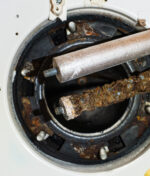
2. The Anode Rod May Be Contributing to the Smell
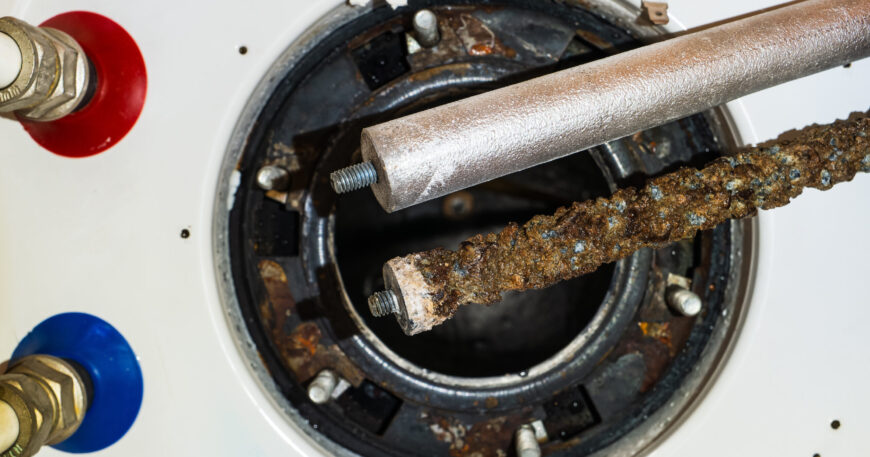
Traditional tank water heaters typically contain an anode rod designed to help protect the tank from corrosion.
Many anode rods contain magnesium. In certain water conditions, magnesium can react with naturally occurring sulfates in the water and contribute to the production of hydrogen sulfide gas. The result is that familiar rotten egg odor.
A plumber may recommend inspecting the anode rod and determining whether a different type is appropriate for your water heater.
The anode rod is there for an important reason, so simply removing it yourself is not recommended. Removing or altering it can reduce corrosion protection and may affect the life or warranty of the water heater.
3. Your Water Supply Could Contain Hydrogen Sulfide
If you notice the smell in both hot and cold water, your water heater may not be the problem at all.
Hydrogen sulfide can occur naturally in groundwater, particularly in homes that use private wells
Sulfur-reducing bacteria may also be present in the well or plumbing system.
A simple first step is to compare the hot and cold water at several faucets throughout your home.
If only the hot water smells, the issue is more likely associated with the water heater. If both smell, it may be time to evaluate your water source or water treatment system.
4. The Smell May Actually Be Coming From a Drain
Sometimes the water gets blamed when the drain is the real culprit.
Organic material can collect inside a sink drain and allow bacteria to grow.
Those bacteria can produce a sulfur or sewage-like odor that becomes more noticeable when water runs into the drain.
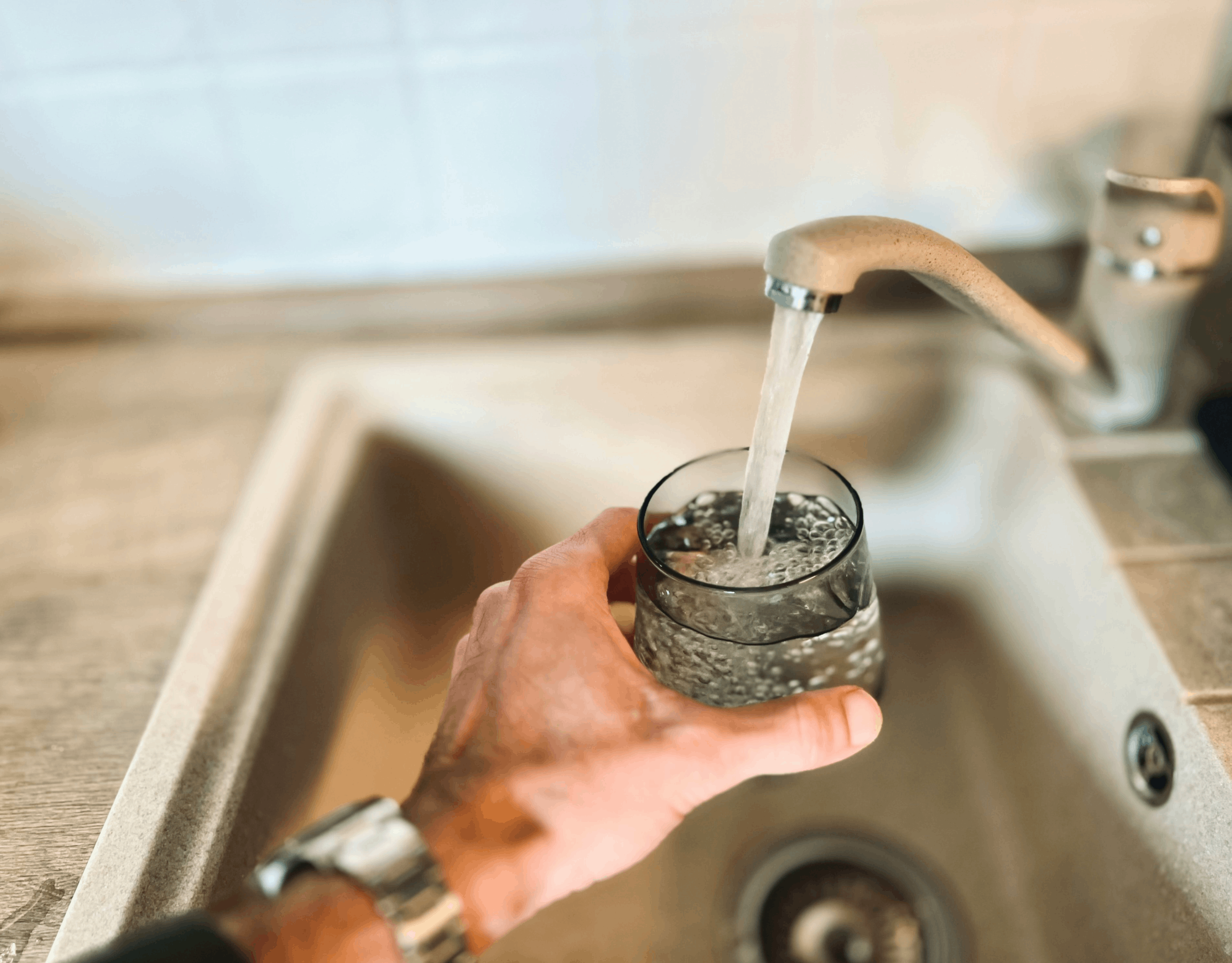
One simple way to check is to fill a clean glass with water and move away from the sink before smelling it. If the water itself does not smell but the area around the sink does, the odor may be coming from the drain rather than your water heater.
Is a Rotten Egg Smell From a Water Heater Dangerous?
In many residential water situations, a mild hydrogen sulfide odor is primarily a water quality and comfort issue rather than an immediate health emergency. The sulfur bacteria commonly associated with the odor are generally not considered harmful themselves.
That does not mean the smell should be ignored.
Hydrogen sulfide can contribute to corrosion of metals in a plumbing system, and persistent odors may point to an issue inside the water heater or water supply that needs attention.
If the smell is strong, suddenly appears, affects both hot and cold water, or is accompanied by unusual water color or other changes, professional evaluation is a good idea.
Can You Fix a Smelly Water Heater Yourself?
There are a few things homeowners can safely check before scheduling service:
Determine whether the smell comes from hot water, cold water, or both.
Check several faucets to see whether the problem is throughout the home.
Determine whether the odor is actually coming from a nearby drain.
Think about whether the water heater has been sitting unused for an extended period.
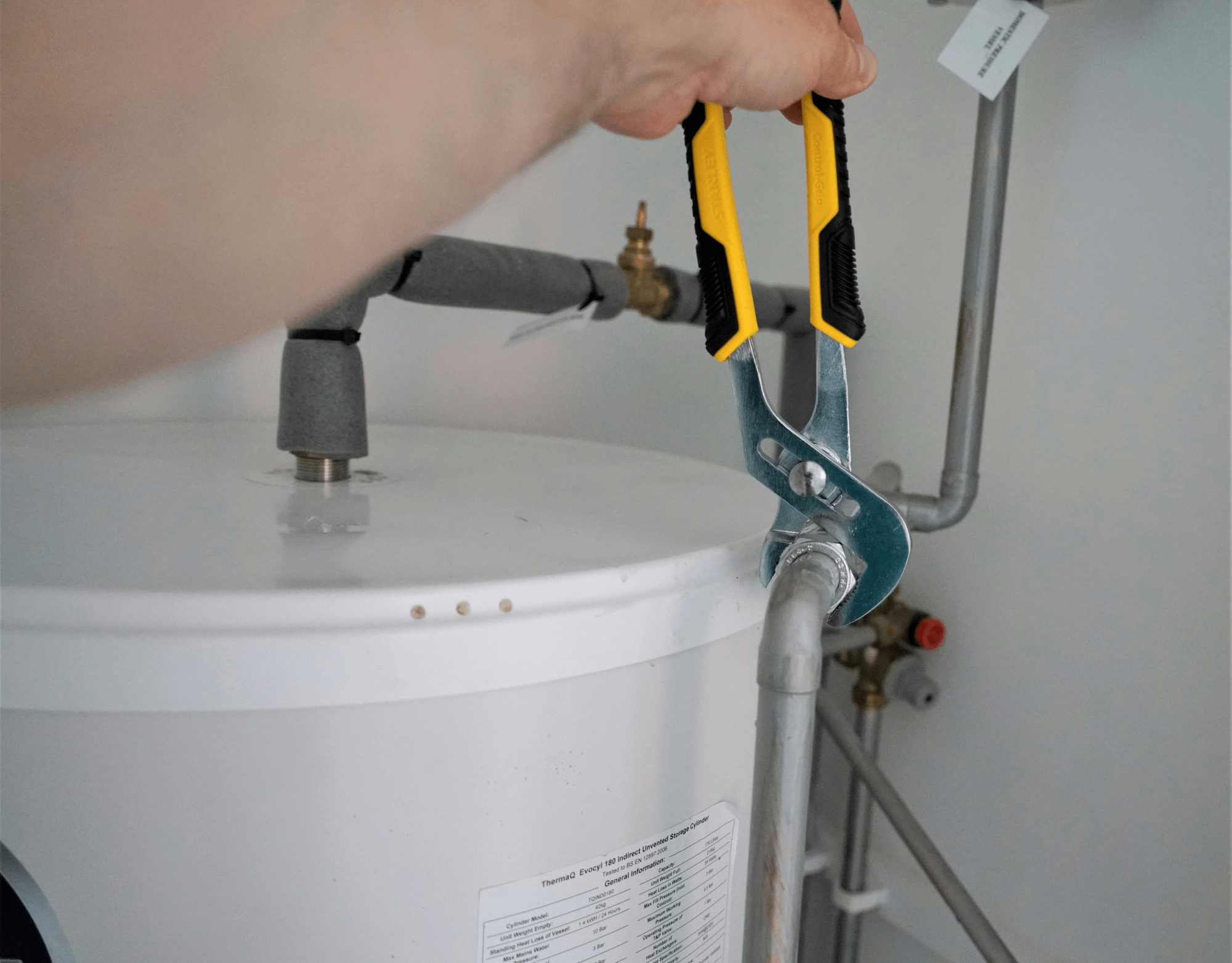
Repairs involving the anode rod, internal tank components, disinfection, flushing, temperature changes, or other water heater adjustments are better handled by a qualified plumber.
Water heaters involve very hot water, pressure, electricity, or gas depending on the system. A professional can diagnose the source of the odor without creating another problem in the process.
What to Expect From a Professional Fix
Depending on the cause, a licensed plumber may flush and disinfect the tank, replace a magnesium anode rod with an aluminum or zinc alternative, or recommend a whole-home water treatment system if the smell is coming from your water supply rather than the water heater itself.
When Should You Call a Plumber?
It is time to schedule professional service if:
The rotten egg smell consistently comes from your hot water.
The odor returns after the water has been running.
You notice rust-colored or discolored hot water.
Your water heater is making unusual noises.
There are leaks or signs of corrosion around the tank.
Your hot water temperature has become inconsistent.
The water heater has not been professionally maintained in some time.
You are unsure whether the anode rod or another component is causing the issue.
Bullhorn Plumbing provides water heater services including water heater repair, maintenance, installation, and replacement for traditional and tankless systems.
A plumber will typically flush and disinfect the tank and inspect the anode rod, replacing it with a different type if it’s reacting with your water. If the smell is coming from your water supply rather than the tank, a water treatment system may be recommended instead.
At the low levels typically found in residential hot water, the odor is mainly a water-quality and comfort issue rather than an emergency. Persistent or strong odors, especially from both hot and cold water, should still be evaluated by a professional.
You can safely check which faucets and drains are affected, but work inside the tank — flushing, disinfection, or anode rod replacement — involves hot water, pressure, and gas or electrical components, and is best left to a licensed plumber.
Get Your Water Heater Smell Fixed in Seguin, TX
A rotten egg smell is unpleasant, but it can also give you an early warning that something in your water heater or water supply needs attention.
Finding the source is the important part. Sometimes the solution may involve servicing the water heater or addressing the anode rod. Other times, the odor may point to the home’s water supply or water treatment system.
If your hot water suddenly smells different, we can help get to the bottom of it. Learn more about our Water Heater Services or give us a call at 210-901-1192 to schedule service.