- October 15, 2026
- Plumbing
Tankless vs. Traditional Water Heaters: Which Is Best for Texas Homes?
Quick answer: Traditional water heaters cost less upfront and are a simple like-for-like replacement, while tankless systems cost more to install but last longer, run more efficiently, and never run out of hot water. In Texas, hard water makes routine maintenance important for either type. The right choice depends on your budget, household hot water demand, and how long you plan to stay in the home.
When it is time for a water heater replacement, one of the biggest decisions homeowners face is choosing between a tankless and traditional water heater. Both can provide reliable hot water, but they differ in cost, efficiency, maintenance, lifespan, and how they handle your household’s hot water demands.
So, when comparing a tankless vs. traditional water heater, which one makes the most sense for a Texas home?
The answer depends on your home, your budget, your water usage, and how long you plan to stay in the property. Here’s what you should know before choosing.
Tankless vs. Traditional Water Heater: What’s the Difference?
A traditional water heater stores and heats a set amount of water inside a tank, commonly 40 to 50 gallons in many homes. The system keeps that water heated and ready for use.
A tankless water heater works differently. Instead of storing hot water, it heats water as it passes through the system when you turn on a faucet, shower, or appliance.
Because tankless systems do not continually maintain a tank of heated water, they eliminate the standby heat loss associated with traditional storage systems.
Neither option is automatically better for every homeowner. Proper sizing and installation matter just as much as the type of system you choose.
At a glance:
| Factor | Traditional | Tankless |
| Upfront cost | Lower equipment & install cost | Higher; may require gas/electrical/venting upgrades |
| Energy efficiency | Standby heat loss from keeping tank hot | No standby loss; heats only on demand |
| Lifespan | Roughly 10–15 years | Often 20+ years |
| Hot water supply | Limited to tank size; can run out | Continuous, but capped by max flow rate |
| Hard-water maintenance | Sediment settles in tank; needs flushing | Heat exchanger scales; needs descaling |
Upfront Cost
For many homeowners, cost is the first consideration.
Traditional Water Heaters
Traditional tank-style water heaters generally have a lower upfront equipment and installation cost, especially when replacing an existing unit with a similar model.
If the plumbing, gas, electrical, and venting connections are already in place, replacement can often be relatively straightforward.
Tankless Water Heaters
A tankless system typically requires a larger upfront investment.
Depending on the home, converting from a traditional tank to tankless may require changes to gas lines, venting, electrical service, or plumbing. These installation requirements can add to the initial cost.
For homeowners planning to remain in their home long-term, however, the potential energy savings and longer equipment lifespan may help offset some of that difference over time.
Energy Efficiency
Energy efficiency is one of the biggest reasons homeowners consider a tankless water heater in Texas.
Traditional water heaters regularly cycle on to keep stored water at the desired temperature, even when nobody is using hot water.
Tankless systems heat water when it is needed instead. This reduces the energy lost from keeping a large tank of water hot throughout the day. Actual energy savings depend on the type of system, household usage, fuel source, and equipment efficiency.
The Department of Energy notes that for homes using 41 gallons or less of hot water a day, demand water heaters can be 24–34% more energy efficient than conventional storage tank water heaters.
If reducing long-term energy use is an important goal, a properly sized high-efficiency tankless system may be worth considering.
Lifespan
Water heater lifespan varies depending on water quality, installation, usage, maintenance, and equipment quality.
As a general comparison, tankless systems can often have a longer service life than traditional storage water heaters. Department of Energy guidance has cited expected lifespans of more than 20 years for tankless systems compared with roughly 10 to 15 years for many traditional units.
That does not mean every tankless water heater will last 20 years or every traditional unit will fail after 10. Regular maintenance plays a major role in how long either system performs well.
Maintenance and Texas Hard Water
Water quality is an especially important part of the tankless water heater vs. tank conversation for Texas homeowners.
Hard water contains higher levels of dissolved minerals such as calcium and magnesium. Over time, those minerals can leave deposits inside plumbing fixtures, pipes, and water-heating equipment. The U.S. Geological Survey notes that hard water can contribute to mineral buildup in plumbing and water heaters.
Tankless Maintenance
Tankless water heaters can be particularly sensitive to mineral buildup inside the heat exchanger. In homes with hard water, regular flushing or descaling becomes especially important.
Skipping maintenance can reduce efficiency, restrict water flow, and place additional stress on the equipment.
Traditional Water Heater Maintenance
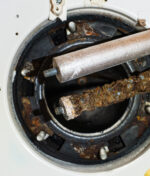
Traditional water heaters also experience sediment and mineral accumulation. Sediment can settle along the bottom of the tank and may contribute to noises, reduced efficiency, and premature wear.
Routine flushing and professional maintenance can help protect the system.
If your home experiences significant hard water, it may also be worth discussing water treatment or a water softener with our team. Our water treatment services cover water softeners and conditioning equipment designed to reduce mineral buildup throughout your home, not just at the water heater.water softener along with your water heater.
Hot Water Capacity
This is one area where the differences between the two systems become very noticeable.
Traditional Water Heater
A traditional water heater gives you a stored supply of hot water.
That can work very well when several fixtures need hot water at once, but once the tank is depleted, you have to wait for more water to heat.
A properly sized storage water heater should account for the home’s peak hot water demand.
Tankless Water Heater
A tankless system does not run out of stored hot water because there is no tank to empty.
However, “endless hot water” does not mean unlimited capacity.
Every tankless unit has a maximum flow rate. If multiple showers, a washing machine, and a dishwasher are all calling for hot water at once, demand can exceed the system’s ability to heat water quickly enough.
That’s why proper sizing is critical. A tankless system should be selected according to expected flow rates and the temperature increase required to deliver hot water throughout the home.
Which Water Heater Is Best for Texas Homes?
There isn’t one best water heater for Texas homeowners across the board.
A few factors can help narrow the choice.
A Tankless Water Heater May Be Right for You If:
- You plan to stay in your home for several years.
- Energy efficiency is a high priority.
- You want a system with a potentially longer lifespan.
- You want to free up space currently occupied by a large tank.
- Your household regularly uses hot water throughout the day.
- You are comfortable investing more upfront.
- You are willing to keep up with routine maintenance, especially in hard-water conditions.
A Traditional Water Heater May Be Right for You If:
- Keeping the initial replacement cost lower is your priority.
- Your current tank system meets your household’s needs.
- You want a straightforward replacement.
- Your household has periods of high simultaneous hot water demand.
- You prefer familiar equipment that is widely used and serviced.
For some homes, replacing an aging traditional system with another properly sized tank heater makes perfect sense. For others, a water heater replacement is the ideal opportunity to move to tankless.
Don’t Choose Based on the Water Heater Alone
The best system depends on more than the equipment itself.
Before recommending a replacement, a plumber should consider factors such as:
- Household size
- Number of bathrooms
- Typical hot water usage
- Gas or electric availability
- Existing gas line capacity
- Venting requirements
- Installation location
- Water quality
- Available space
- Long-term plans for the home
A system that looks great on paper can still perform poorly if it is improperly sized or installed.
Water Heater Installation, Repair, and Maintenance in Seguin, TX
Whether you are replacing an aging tank, considering an upgrade to tankless, or trying to get more life from your current system, we can help you determine the right solution for your home.
We provide water heater installation and replacement, water heater repair, and water heater maintenance for homeowners throughout Seguin and surrounding communities.
Learn more about our Water Heater Services or give us a call at 210-901-1192 to request a free estimate.
Frequently Asked Questions
Is a tankless water heater better than a traditional water heater?
Not necessarily. Tankless water heaters offer advantages such as on-demand heating, reduced standby energy loss, compact size, and potentially longer equipment life. Traditional water heaters generally cost less upfront and can be a practical choice for households that already have an appropriately sized tank system.
The better option depends on your household’s water usage, budget, existing plumbing and utilities, and long-term goals.
Do tankless water heaters really provide unlimited hot water?
A properly sized tankless system can continue heating water as long as there is demand, so you do not empty a stored tank of hot water.
However, every unit has a maximum flow capacity. Running several hot-water fixtures simultaneously can exceed that capacity. Proper sizing is essential.
Does Texas hard water affect tankless water heaters?
It can. Hard water contains minerals that may accumulate inside a water heater over time. Tankless heat exchangers can develop scale buildup if the system is not properly maintained.
Homes with harder water may require more frequent flushing or descaling, and homeowners may want to consider water treatment options as part of their overall plumbing system.
How long does a tankless water heater last compared with a traditional tank?
Tankless water heaters can often have a longer expected service life than traditional storage systems, but actual lifespan varies considerably based on water quality, maintenance, installation, usage, and equipment quality.
Regular professional maintenance can help extend the useful life of either type of water heater.
Is switching from a traditional water heater to tankless worth it?
It can be, especially for homeowners who value energy efficiency, space savings, long-term equipment life, and on-demand hot water.
However, conversion costs should be considered. A home may require gas line, electrical, venting, or plumbing modifications before a tankless system can be installed.
A professional evaluation can help determine whether converting to tankless makes financial and practical sense for your home.
When should I replace my water heater?
Replacement may be worth considering if your water heater frequently needs repairs, no longer provides enough hot water, shows signs of corrosion or leaking, makes unusual noises, or is reaching the later years of its expected service life.
Rather than relying on age alone, having the system inspected can help determine whether repair or replacement is the better investment.
Related Posts
Recent Posts
Tankless vs. Traditional Water Heater: Best for Texas Homes
How to Tell If You Have Hard Water at Home