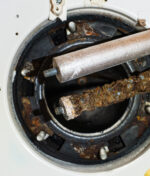
White spots on your faucets, cloudy glasses, stiff laundry, or a water heater that seems to collect mineral buildup quickly may all point to the same problem: hard water.
The signs of hard water are not always dramatic, but over time, mineral-heavy water can affect your plumbing, fixtures, appliances, and even how well soap and detergent work.
If you are wondering how to tell if you have hard water, here are the most common symptoms to look for, how to test your water, and what you can do about it.
Quick Answer: The most common signs of hard water are white, chalky buildup on faucets and showerheads; cloudy spots on dishes; soap and shampoo that won’t lather well; dry skin or hair after bathing; stiff laundry; and mineral scale collecting inside water heaters and other appliances. A home test strip gives a quick estimate, while a professional water test confirms exact hardness and the right treatment.
What Is Hard Water?
Hard water contains higher concentrations of dissolved minerals, primarily calcium and magnesium. These minerals occur naturally as water moves through soil and rock before reaching a home’s water supply.
Hard water is generally considered more of a household nuisance than a health concern. The bigger issue is what those minerals can leave behind.
Over time, mineral deposits can accumulate on fixtures, inside pipes, and in appliances that regularly use water.
Much of Central and South Texas, including the Seguin and San Antonio area, sits over limestone aquifers that are naturally rich in calcium and magnesium, which is why hard water is such a common complaint for homeowners Bullhorn serves.
7 Common Signs of Hard Water
Some hard water symptoms are easy to spot once you know what to look for.
1. White or Chalky Buildup on Faucets and Fixtures
One of the most noticeable signs is a white, crusty residue around faucets, showerheads, drains, and other plumbing fixtures.
As water evaporates, minerals can remain behind and create visible scale.
If you are constantly cleaning the same cloudy buildup only to see it return, hard water could be the reason.
2. Spots or Film on Dishes and Glassware
Do your glasses come out of the dishwasher looking cloudy even though they are clean?
Minerals in hard water can leave spots and film behind as dishes dry. The U.S. Geological Survey identifies cloudy glassware and mineral residue as common effects of hard water.
3. Soap Doesn’t Lather Well
Another easy clue is what happens when you use soap.
Hardness minerals can react with soap, making it harder to create a good lather. That means you may find yourself using more hand soap, shampoo, laundry detergent, or dish soap to get the same results.
You might also notice soap scum building up more quickly around sinks, tubs, and showers.
4. Dry-Feeling Skin or Hair
If your skin or hair feels different after showering, the water itself could be contributing.
Mineral residue and soap that does not rinse away as effectively can leave skin and hair feeling dry, coated, or less clean.
This symptom alone does not confirm hard water, but when paired with scale or spots on fixtures, it may be another clue.
5. Stiff or Dull Laundry
Hard water can make detergent less effective.
Clothing and towels may come out of the wash feeling stiff or less fresh than expected. You may also find that you need more detergent to get clothes clean.
6. Scale Around Your Showerhead
Mineral buildup does not only affect how fixtures look.
Scale can collect around the small openings of a showerhead or faucet aerator, restricting water flow over time.
If you regularly need to remove mineral deposits to restore normal flow, it may be worth checking the hardness of your water.
7. Buildup Inside Water-Using Appliances
Some of the most important hard water problems are the ones you cannot immediately see.
When hard water is heated, calcium carbonate deposits can form inside water heaters and other equipment. Scale buildup can reduce efficiency and contribute to problems in plumbing and water-using appliances.
Potentially affected equipment includes:
Traditional water heaters
Tankless water heaters
Dishwashers
Washing machines
Coffee makers
Ice makers
Plumbing fixtures
Routine maintenance becomes especially important when a home has hard water.
If you’re noticing reduced hot water, longer heating times, or unusual noises from your unit, mineral buildup may already be at work, see our guide ontankless vs. traditional water heatersfor how hard water affects each type differently.
How Hard Water Can Affect Your Plumbing
Mineral deposits can accumulate gradually inside plumbing components.
Over time, excessive scale may contribute to restricted flow, clogged fixtures, and additional wear on water-using equipment. USGS guidance notes that hard water can form scale inside pipes and water heaters.
That is why dealing with hard water is about more than keeping faucets looking clean. Water treatment may also help protect parts of your plumbing system from ongoing mineral buildup.
Homes on private wells can be especially prone to hardness, since well water bypasses municipal treatment. If you’re on a well and dealing with frequent clogs, reduced pressure, or a pump that seems to be working harder than it should, ourwell pump services team can check for mineral-related wear at the same time.
Is Hard Water Common in Texas?
Water hardness varies by location and water source, including throughout Texas.
Groundwater can become mineral-heavy as it travels through soil and rock and dissolves naturally occurring calcium and magnesium along the way.
For Texas homeowners who notice recurring scale, cloudy dishes, soap scum, or appliance buildup, testing the water is the best way to determine whether hardness is contributing to the problem.
Guessing based on appearance alone cannot tell you exactly how hard your water is.
How to Test Your Water Hardness
A water hardness test can provide a much clearer answer.
Homeowners have several options.
Use a Home Water Hardness Test Kit
Water hardness test strips are widely available and can provide a quick estimate.
Typically, you dip the strip into a water sample and compare the resulting color with the chart provided by the manufacturer.
For the most accurate results, follow the instructions included with the specific test kit.
Check Your Local Water Quality Report
If your home receives water from a municipal utility, the utility may publish information about the water supply.
This can provide useful background information, although the water coming from your individual home’s fixtures may still warrant testing if you are experiencing specific concerns.
Schedule Professional Water Testing
A professional evaluation can determine the hardness level of your home’s water and help identify which type of treatment system makes sense.
Bullhorn’s water treatment servicesinclude evaluating water supplies for hardness and recommending softener or conditioner systems based on the home’s needs.
What Do Water Hardness Test Results Mean?
Water hardness is commonly measured in milligrams per liter, or mg/L, as calcium carbonate.
The U.S. Geological Survey generally classifies water hardness as shown below:
Hardness Level
Reading (mg/L as CaCO₃)
Soft
0 – 60
Moderately Hard
61 – 120
Hard
121 – 180
Very Hard
More than 180
A professional can help you interpret your results and determine whether treatment would provide a meaningful benefit for your household.
What Can You Do About Hard Water?
If testing confirms hard water, there are several potential water treatment solutions.
Water Softeners
Water softeners are designed to reduce the hardness minerals responsible for scale and many common hard water symptoms.
A whole-home water softener may help reduce:
Mineral buildup
Scale on fixtures
Soap scum
Spots on dishes
Hard water effects on plumbing and appliances
Bullhorn installs and services water softeners designed to address mineral-heavy water throughout the home.
Water Conditioners
Depending on your water quality and household needs, a water conditioner may also be an option.
Rather than functioning exactly like a traditional softener, certain conditioning systems are designed to alter how hardness minerals behave to help reduce scaling.
The right choice depends on your water supply and what you want the system to accomplish.
Water Filtration
Hardness is only one aspect of water quality.
If you are also concerned about drinking water quality, taste, odor, sediment, or other water characteristics, additional filtration may be worth considering. Bullhorn also provides filtration options, including reverse osmosis systemsfor drinking water.
Stop Fighting Hard Water Every Day
If you’re constantly wiping scale from faucets, cleaning cloudy glassware, or dealing with mineral buildup around the house, it may be time to find out what is actually in your water.
We can test your water, determine the level of hardness, and recommend a solution based on your home’s needs.
Common signs include white mineral buildup on faucets, cloudy glasses, soap scum, poor soap lather, spots on dishes, stiff laundry, and scale around showerheads or other fixtures.
Hard water can also cause mineral buildup inside water heaters and other water-using appliances.
The easiest way to know for sure is to perform a water hardness test.
Home test strips can provide an estimate, while professional water testing can provide more detailed information and help determine which treatment solution is appropriate.
Hard water can cause mineral scale to accumulate inside pipes, fixtures, water heaters, and appliances over time. Heavy buildup may restrict water flow and contribute to equipment problems.
Water hardness varies significantly depending on location and water source. Homes supplied by mineral-rich groundwater may experience higher concentrations of calcium and magnesium.
Testing your home’s water is the best way to determine your actual hardness level.
Mineral deposits can accumulate when hard water is heated. Scale and sediment buildup may reduce efficiency and put additional stress on water-heating equipment over time.
Regular maintenance is especially important for water heaters operating with hard water.
It depends on your water quality and what you want to address.
A water softener is typically used to reduce hardness minerals, while water conditioning systems may use other methods to help control mineral scaling. Professional water testing can help determine which solution is better suited to your home.
Cost depends on household size, water hardness, and the type of system, so the best way to get an accurate number is a free in-home estimate. Bullhorn can evaluate your water and provide a firm quote before any work begins.
With regular maintenance, such as keeping the brine tank stocked and replacing the resin as needed, a quality water softener typically lasts 10 to 15 years before it needs to be replaced.